
Clear choices for heavily used ground
Traffic loads come first
We consider axle loads and turning areas when discussing the surface build-up.
Materials aren't assumed
We can compare asphalt and tarmac against the actual site conditions.
Operations stay visible
We plan working zones around deliveries, equipment and occupied premises.
Asphalt selected for the way your site works
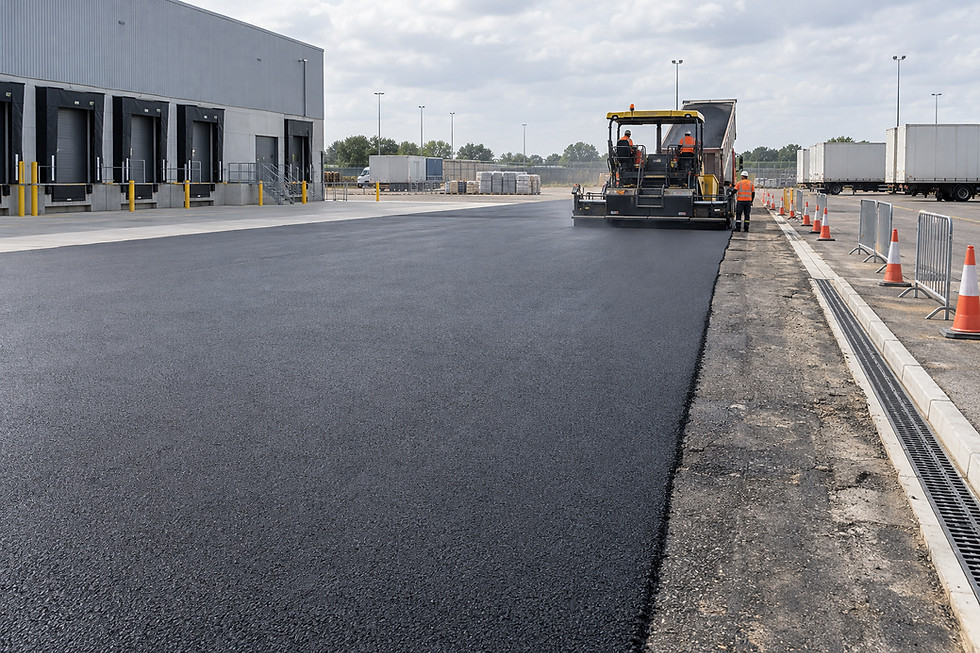
Service roads, operational yards and busy parking areas face repeated loads and tight turning movements. The visible finish is only part of the job. We examine traffic use, drainage, surface texture and the condition of the existing base before discussing commercial asphalt surfacing in Rochester. A new construction may be needed where no suitable structure exists. Stable surfaces can sometimes be resurfaced, while isolated failures may need removal and replacement. We discuss asphalt and tarmac on their merits instead of treating either material as the automatic answer.

Preparation keeps the finish even
Weak support, poor levels and trapped water can shorten the useful life of any new asphalt. We prepare suitable layers, correct failed sections and pay attention to edges and connections before laying. Proper compaction then helps form an even, serviceable finish. Commercial planning is equally important. We need to understand delivery activity, equipment access, staff routes and areas that cannot close together. For larger schemes, we can supplement our core team with additional contractors to match the project's scale.
Frequently asked questions
How do asphalt and tarmac choices differ for a site?
The suitable material depends on the required finish, traffic, base and proposed construction. We consider both rather than relying on a name alone. Site condition and intended use provide the practical basis for the discussion.
Can commercial asphalt be laid over an old surface?
It may be possible where the old construction is stable, properly prepared and suitable for the required levels. Failed areas must first be removed or repaired. Drainage and edge connections also need checking before an overlay is recommended.
What information is needed before planning asphalt work?
We need the approximate area, current condition, vehicle types and access arrangements. Details about deliveries, operating hours and sections that must remain open also help us decide how preparation and laying could be organised.