
A route planned from verge to verge
Gradients are considered
We examine slopes and water movement before deciding how to renew the road.
Edges get proper support
Weak verges and crumbling sides are included in the condition review.
Essential journeys matter
We plan the work around the people and vehicles relying on the route.
Keep a shared or private route usable
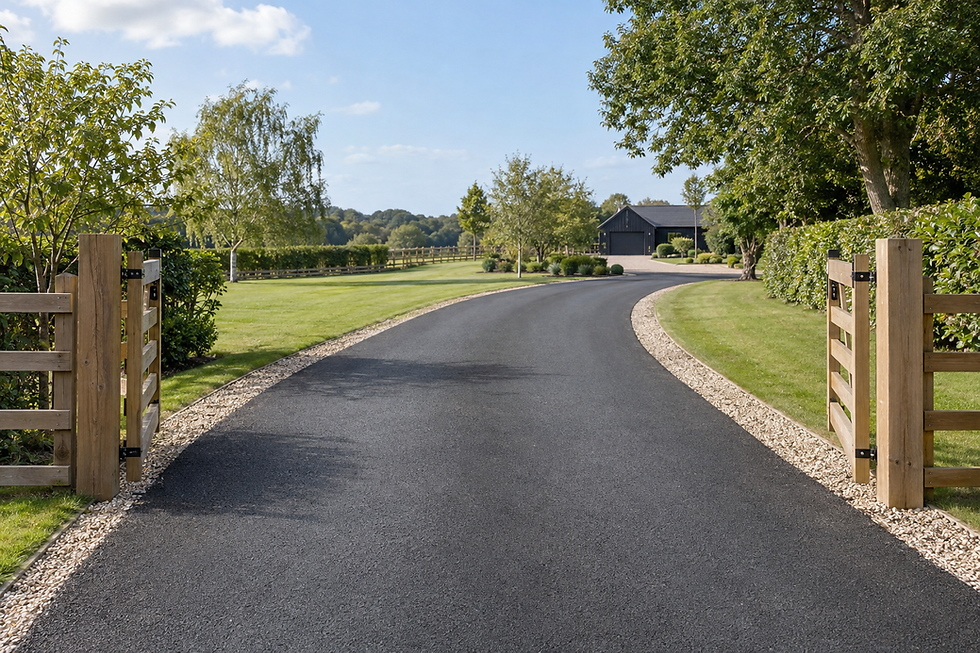
A private road may carry residents, deliveries, visitors and service vehicles every day. Ruts, weak verges and poor run-off can make the route awkward long before it becomes impassable. We plan private road surfacing in Rochester around the width, gradient, turning space and traffic using it. The existing surface and supporting layers determine whether targeted repairs, resurfacing or a new construction is appropriate. Tar and chipping may also suit some stable routes. We explain the practical differences rather than forcing every lane into the same specification.

Access remains part of the job
Private routes often have no convenient alternative entrance, so the work sequence matters. We discuss who needs access, when deliveries arrive and where vehicles can wait while sections are prepared and laid. Drainage, verge condition and edge stability receive close attention because narrow roads can fail from the sides as well as the centre. Where the base has moved or water has weakened it, surface treatment alone may not be enough. A proper assessment helps avoid placing a smart finish over unstable construction.
Frequently asked questions
Is tarmac always the best finish for a private road?
Not always. Traffic, base stability, appearance and the current construction all matter. Tarmac may suit a full resurfacing scheme, while tar and chipping can suit some prepared, stable routes. We assess the road before discussing either option.
Can residents still use the road during surfacing?
Access depends on the road width, available turning space and stages of the work. We discuss essential movements before starting and may be able to sequence sections. Temporary restrictions can still be needed during laying, rolling and cooling.
Should broken areas be repaired before resurfacing?
Yes, failed sections usually need proper preparation first. Covering depressions, loose edges or weak support can allow defects to return through the new finish. We identify areas needing removal, level correction or base repair before surfacing.